
Implementation of Applied Training, Research and Technology Transfer Model
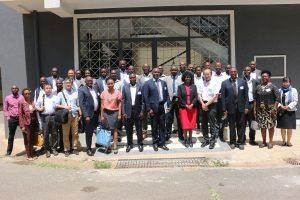
1.0 Sensitization to Staff and Students
Background: As the acting principal of the college of engineering and technology I sought to introduce the concept of Applied Training, Research and Technology transfer into JKUAT. I did this by highlighting key features of UAS to JKUAT staff and students, encouraging students to identify industry challenges as projects as well as inviting the industry to JKUAT. The concept of UAS was captured in the sensitization based on its curriculum development guided by blue ocean strategy, use of conceptual seminars in training, internship periods lasting 100 working days, didactic training of professors (with more than 5 year’s experience), among others.
Staff Sensitization: Sensitization this was done at 2 levels that is at a senate committee of Deans and at the college level to Deans and also a combination of Deans and chairmen of departments. I presented a report of the 3 workshops in Germany. The members of staff appreciated the model of UAS in regard to curriculum development (including how internships are structured, the conceptual seminars and the applied research and technology transfer), the didactic training and how it is implemented.
Student Sensitization: I have also presented the concept of the UAS model to undergraduate students in Mechanical Engineering who are undertaking Thermofluids option in the class of 4th year mechanical engineering and also the Society of Engineering Students. There has been a positive feedback from the students in which the approach
2.0 Identification of Projects by Students:
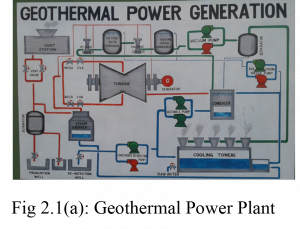
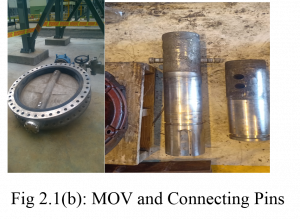
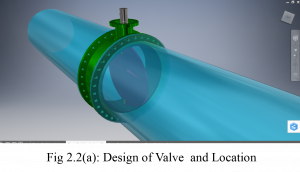
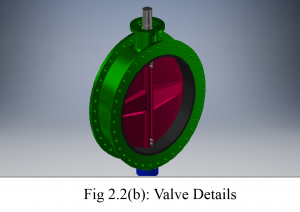
I made an effort towards the end of last year upon return from the 1st workshop. We had agreed with 2 of my students that they identify a project which is a challenge from the industry as their final year project. This is a group of 2 students Blessing Ndiewo and Laureen Muloli who had approached me to supervise them. The students were able to identify a challenge at Kenya Electricity Generating Company and came up with the project titled, Performance testing and simulation of a motor operated valve in a geothermal power plant. The project involved helping the company overcome the constant failure of a motor operated valve (MOV) that is used to isolate condenser water from geothermal generating plant during service and maintenance. Through a visit to the company the students and I have been able to among others;
- Understand the details and the nature of failure
- The conditions under which the MOV valve operates
- Simulating the operating conditions using design and flow simulation softwares
- Are in the process of developing a solution to solve the challenge
3.0 Invitation of Industry Players to JKUAT
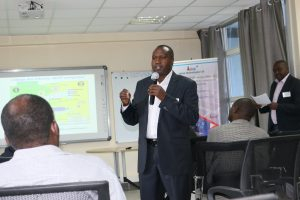
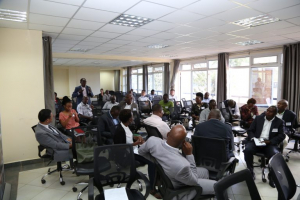
On 14th April JKUAT invited the members of the industry at the Innovation and Prototyping Integrated Centre (IPIC) situated within the College of Engineering and Technology invited the industry. The industry consisted of Mobius motors limited (manufacturing), Kenya Electricity Generating Company (power generation), Kenya Electricity Transmission Company (power distribution company) and Total Quality Motors (a motor vehicles repair company. The purpose of the meeting was to
- Share with the industry the facilities that JKUAT has for training and research. These included computer numerical control machines including laser cutters and printers, 3D printer, PCB milling machine, among others.
- Present the innovations arising from research and the projects by the staff and students. These include among others; Maritime Technical Corporation Centre (MTCC) which is the only African center of the global MTCC network funded by European Union (EU) through International Maritime Organization (IMO), The manufacturing research chair funded by Canadian International Development Research and Corporation (IDRC), The manufacturing activities in with JKUAT is working with private sector including assembly of pumps with a Danish startup company called aQysa and finally an autonomous seed planter, an autonomous robot for packing products, among many other innovations.
- Explore ways of working together to integrate a culture of applied research, training and technology transfer for mutual of benefit of JKUAT and industry as well as the society
We received positive feedback with the industry demonstrating their willingness to test this model of applied training and research. The following were some of the outcomes
- There has been a gap between what professors in the university do which does not relate to the challenges faced by the industry
- There is a lot of facilities some of which the industry has been exploring to import yet they exist in JKUAT and can be utilized
- There is a need to profile the facilities and innovations for other companies to know and see how to benefit.
4.0 Challenges During Implementation and How They were Addressed
There are number of challenges that were encountered in the implementation of the model of applied training, research and technology transfer. These have been highlighted below and how they were addressed.
| S/No | Challenge | How the challenge manifested | How Challenge was addressed |
| 1. | Staff Awareness to Applied Sciences | · Staff with knowledge about the model felt that it is designed for tertiary training
· Loaded schedule of staff |
· Sensitization of staff at college management for Buy in
· Sensitization of all Deans at Deans committee of senate |
| 2. | Student Awareness to Applied Sciences | Students have not come across this model | · Emphasis to staff to incorporate challenge identification during student attachment
· Sensitization of the UAS model to Society of Engineering students |
| 3. | Facilities | · Buildings for hosting applied research labs
· Technical Facilities such as Research labs, E-learning software, Virtual reality software, among others missing |
· Engaging University management to allocate space
· Applying for facility funding |
| 4. | Industry participation | · Industry unfamiliar with UAS Model
· Funding for mounting a meeting with Industry |
Stakeholder engagement |
| 5. | Stakeholders Requirement | Engineers board of Kenya that regulates engineering training would require t | Sensitization of Engineering Professional Bodies |
| 6. | Curriculum structure | Existing curriculums have 8 to 12 weeks internships | Sensitization of staff, students and stakeholders to adopt new model |
| 7. | Financial control | Highly centralized system with many approval levels | · Finance department participation in UAS workshop
· Advocating for decentralization including creation of a grants office |